ChatMTB is an AI assistant — AI can make mistakes, always verify info

Short days and wet ground do not have to end the riding year. Where to ride in the UK when the trails are soaked, what to wear, how to set up your bike for mud, and how to keep your local trails in shape until spring.
Winter riding in the UK
Most UK riding happens on wet ground for half the year. Some trails cope with that and some do not, and the difference comes down to what is under your tyres. Surfaced trail centre singletrack, built on stone and graded to shed water, rides much the same in January as in June. Natural trails on sand, chalk, gritstone or rock drain quickly and can be at their best on a cold, dry winter day. Natural trails on clay or peat hold water for weeks, turn to slop, and are easily damaged when ridden soft.
This guide lists venues that hold up well in winter. It is not a list of the only places open: most venues ride all year, and many natural trails are fine after a dry spell or a hard frost. Every trail page has a Weather tab with a read on current ground conditions that adjusts to the local soil, rain in the last 24 hours, the temperature, daylight left and tips on kit and setup, so check it before you go. More on how that works in our weather tab article.
What to wear
Dress in layers you can adjust as you warm up on climbs and cool down on descents and stops.
- A close-fitting base layer that wicks sweat away. Merino stays warm when damp.
- An insulating mid layer, such as a long-sleeved winter jersey or a light fleece.
- A waterproof, windproof jacket. One that packs small lets you take it off on the climbs.
- Winter tights, or shorts over thermal tights, or waterproof trousers on the wettest days.
- Warm, waterproof gloves, plus a dry spare pair in your pack for the second half of the ride.
- Waterproof socks, overshoes or winter boots. Wind chills feet as much as rain does, and riders who go up a shoe size have room for thicker socks.
- A thin skull cap or neck tube under your helmet for your ears.
- Clear or yellow lenses rather than dark ones, because light is flat under trees in winter and mud flies.
- Dry clothes and a towel in the car for afterwards.
Setting up your bike for winter
- Tyres with taller, more widely spaced knobs cut through mud to firmer ground and clear it better. A more aggressive front tyre alone gives a lot of extra confidence, and softer rubber grips better on wet roots and rock.
- Drop your tyre pressures by a few psi for grip, a little at a time. Keep enough pressure for rocky trails, where pinch flats and rim damage are the risk.
- Tubeless is more reliable in winter: fewer punctures, and nobody wants to fix a tube with cold hands.
- Fit a mudguard. Even a short one behind the fork crown keeps grit out of your eyes and off your fork seals. Check the tyre clears it with mud on.
- Use a wet-weather chain lube, and reapply it after every wet ride.
- Check your brake pads more often. Gritty mud wears them out in a few rides, and pads designed for wet conditions last longer.
- Softening your suspension a little helps on slow, slippery ground. Start small from your usual settings, and check your sag afterwards.
Looking after the trails
Wet ground is soft ground, and that is when trails are most easily damaged. Volunteers fix most of the damage, often on their weekends.
- If your tyres leave a deep rut, the trail is too wet to ride. Pick a surfaced trail instead, or come back after a few dry days.
- Ride through puddles and the middle of muddy sections, not around them. Riding round the edge widens the trail.
- Do not skid. Locking your back wheel into corners tears up the surface, especially on steep trails and switchbacks.
- Thawing ground after a frost is softer than it looks: the top layer is saturated while the ground under it is still frozen.
- Stay off soft, boggy ground away from the trail. In Scotland the Scottish Outdoor Access Code asks riders to avoid wet, boggy or soft ground, especially in winter.
- Respect closures and diversions. Winter is felling and storm-damage season in forests, and machinery and fallen trees make closed areas dangerous. Check the venue's own site or social media before you set off.
- Join a dig day. Most trail centres and many local trail groups run volunteer days, and winter is when most of the work gets done.
Riding in the dark
- Use a bright bar light and a helmet light. The helmet light points where you look, round corners the bar light cannot see.
- Charge everything before you go, and carry a backup light for the ride home.
- Use rear and front road lights on any road sections. Turn your trail lights down or point them low for oncoming traffic.
- Tell someone where you are going and when you will be back, or ride with others. Keep your phone charged, and carry a spare layer for when you stop.
- Night rides on a familiar trail feel new. Start on trails you know well.
After the ride
- Wash the bike soon after, before the mud dries. Use a hose on a gentle setting or a bucket and brush. A pressure washer forces grit and water past bearing seals.
- Dry the chain and relube it, then wipe the fork stanchions and shock shaft clean.
- Check pads, tyres and bolts while the bike is clean, so problems show up before the next ride rather than during it.
- Bearings, brakes and drivetrains wear faster in winter, so expect to service them more often than in summer.
How we chose these venues
No single source says which trails ride well in winter, so we put several together. We started with the soil under every trail, the same soil map that drives the Weather tab. We added what venues and land managers publish about how their trails are built, from operators' own sites to Forestry England, Natural Resources Wales, Forestry and Land Scotland and Mountain Bike NI, and what magazines and guidebooks say. Then we read what iBikeRide riders say in their reviews on each trail page, and that often settled it. Some well-known trail centres stayed out because riders and land managers both say they hold water, and some smaller bike parks went in because riders say they drain well after rain.
We left out venues that close for the winter, pump tracks, BMX tracks and jump parks (riding shaped dirt wet damages it), and natural trails on clay or peat. The "Riders say" lines are short quotes from reviews on iBikeRide trail pages, trimmed but not reworded. The guide grows as we check more venues, so if you ride somewhere through the winter, leave a review on its trail page and tell us how it holds up.
England
South West
10 listings
Lanhydrock Cycle Hub, Cornwall
Mainly green and blue trails, hard packed and a little stony, so expect a puddle or two rather than deep mud. The wide green Lodge Trail is the easiest choice in the wet.
Old Hill Bike Park, Cornwall
A bike park with surfaced trails built to keep running in wet weather, so mud stays off the main lines.
Poldice Valley Trails, Cornwall
Riding over hard-packed old mining spoil that drains well, so the valley rides through winter better than most Cornish dirt. The jumps and gaps are community built, so check a line before you commit to it.
Haldon Forest, Devon
Spicers and Kiddens run on hard-packed gravel and flint and are the dependable winter laps. Ridge Ride holds puddles and some mud after rain.
Ashton Court, Bristol
The Nova blue loop is built for all-weather riding and free to ride all year, so it is Bristol's winter loop. The optional Supernova sections get muddier.
Leigh Woods, Bristol
Yer Tiz was resurfaced for all-weather riding, and the jump line below the car park is surfaced too.
Forest of Dean, Gloucestershire
The Verderers blue is surfaced and holds up in the wet. Freeminer and the off-piste singletrack get greasy on the clay after heavy rain.
Riders say “Always enjoy the day when we visit FOD, even in the wet.”
Flyup 417 Bike Park, Gloucestershire
Surfaced uplift-served downhill tracks that run in most weather. The natural black lines get slippery when wet, and the dual slalom usually closes for the winter.
Riders say “We used Fly-Up as our winter base as guaranteed trails all running.”
Wind Hill B1KE Park, Wiltshire
A bike park that stays open through the winter on shorter hours, with trails, especially the blacks, that riders report drain well. Expect roots and the odd slippery section.
Croft Mountain Bike Trail, Swindon
A short, free loop that volunteers resurfaced with limestone after parts turned boggy, now a good all-weather training lap. Expect some soft patches in the wettest spells.



South East and East
8 listings
Queen Elizabeth Country Park, Hampshire
The 6km blue trail is built to ride all year. The red and the natural South Downs tracks are chalk, which gets slippery when wet.
Riders say “Blue trail skills area berms drains water away well.”
Swinley Forest, Berkshire
Purpose-built trails on sandy ground that drains fast, so expect loose sand rather than deep mud.
Riders say “This is my go to place when weather is bad and Surrey Hills is a mud fest.”
Bedgebury Forest, Kent
A 13km red singletrack loop with an optional black section, plus forest roads and a family trail. It is twisty and rooty, but holds up better than most Kent riding.
Riders say “Good in all weather unlike most of Kent's trails.”
Chicksands Bike Park, Bedfordshire
Trails on free-draining sandy forest ground that keep running through the winter. The dirt jump lines can be closed or soft after prolonged rain, so check before you travel.
Riders say “Also drains well if there's been a bit of rain.”
Rushmere, Bedfordshire
Sandy ground that drains freely and is ridden all year. The cross country trail needs a permit.
Riders say “The few trails that are there are well-made and run all year round.”
Woburn Bike Trails, Milton Keynes
The Longslade and Danesborough trails sit on free-draining sandy ground and ride through the winter, though long wet spells leave some sections sloppy. A permit is needed.
Thetford Forest, Suffolk
A sandy forest floor that drains quickly, so the singletrack usually rides better after rain than trails on clay.
Twisted Oaks Bike Park, Suffolk
A rider-built park in Brightwell Country Park with blue and red cross country loops, woodland lines and jump lines.
Riders say “Drains really well if it's been wet, to the point you really wouldn't know it's been raining.”



Midlands and North
5 listings
Sherwood Pines, Nottinghamshire
Fast-draining sandy ground and a forest road network keep it rideable through the winter, puddles aside.
Riders say “Drains really well so it's possible to ride it all year round.”
Lee Quarry, Lancashire
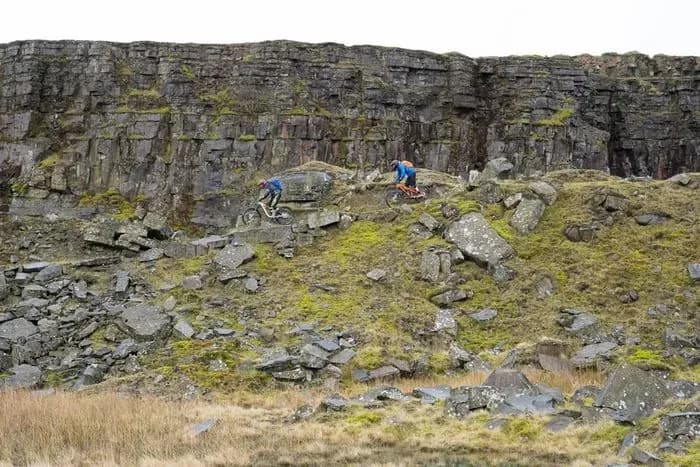
Built in an old quarry, so the trails run over rock slabs and stone rather than soil. It is high and exposed, so dress for wind.
Riders say “Lots of quarried rocks ensuring technical, chunky all year round trails.”
Whinlatter, Cumbria
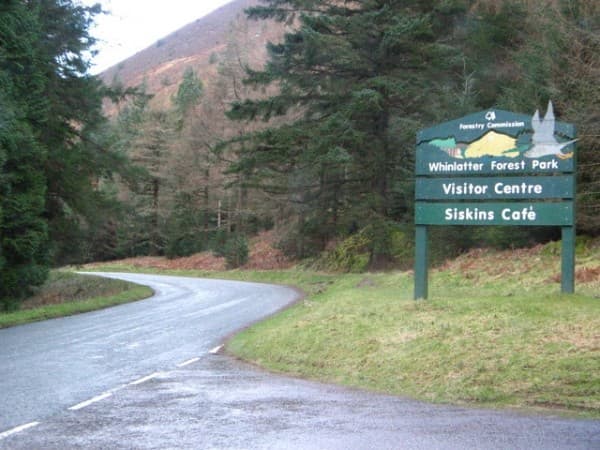
The Altura and Quercus trails are surfaced with stone and slate and keep running through wet spells. Slate is slick when damp or frosty, and the tops are cold and exposed.
Riders say “This is an all year all weather centre and the trails hold up well.”
Hamsterley Forest, Durham
Waymarked trails that mix forest road and singletrack and hold up through the winter. The off-piste riding around them turns boggy.
Riders say “Something for everyone and rides well wet or dry.”
Dalby Forest, North Yorkshire
The red network is well drained and one of the better northern choices after rain. Snow and ice close trails now and then.
Riders say “Trails are generally rideable all year round.”
Wales
North Wales
2 listings
Coed y Brenin, Gwynedd
Rock-based trail centre riding with plenty of forest road, long a wet-weather choice. Wet rock is slippery on the technical sections, and there are stream crossings.
Coed Llandegla, Denbighshire
Waymarked trail centre loops that drain well, with off-piste Natural Selection lines over roots and bedrock that are slippery when wet. The site sits in a frost pocket, and snow and ice have closed it in hard winters.
Riders say “Trails are always well maintained, and drain well in the winter months.”

Mid and West Wales
2 listings
Nant yr Arian, Ceredigion
Singletrack built for all-weather riding, plus a forest road loop that is fine all winter. The upper trails are exposed and can be icy, and felling sometimes closes trails late in the winter.
Riders say “Great riding, rides well in all weather.”
Brechfa, Carmarthenshire
The Gorlech red is hard-packed and the pick for a wet day. The Raven and Derwen are more natural singletrack and get muddy.
South Wales
3 listings
Afan Forest, Neath Port Talbot
Purpose-built singletrack that is one of the better South Wales bets for a wet day. The exposed ridge sections are hard going in grim weather, and forestry diversions are common.
Riders say “Truly all weather trails, which is good because you can get all weathers in one weekend.”
BikePark Wales, Merthyr Tydfil
Surfaced flow and technical trails alongside natural sections, running through the winter, though storms have forced short closures.
Riders say “I rode the trails for the first time in the wet, it was pretty much the same grip as in the dry.”
Cwmcarn, Caerphilly
The Twrch and Cafall reds have a solid base, and some sections have been resurfaced. Ice can linger on the high ground.
Riders say “Runs perfect all year round.”

Scotland
Highlands and North East
4 listings
Laggan Wolftrax, Highlands
Rock-armoured shale and slab trails that shed water better than most, and a hard-wearing sealed orange line. Expect cold, ice and some mud on the greens, and check for forestry closures.
Moray Monster Trails, Moray
The three Ordiequish blues run on hard singletrack and forest road and are the winter choice. The red and freeride trails at Winding Walks are earth trails that suffer in the wet.
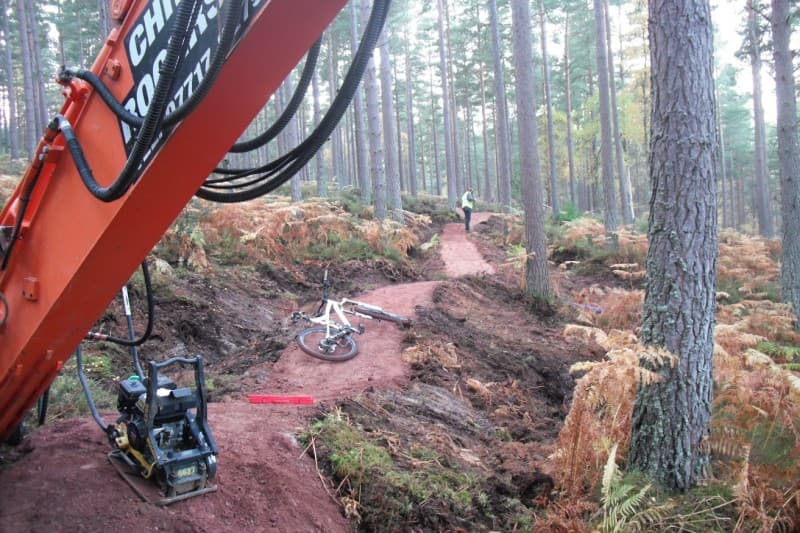
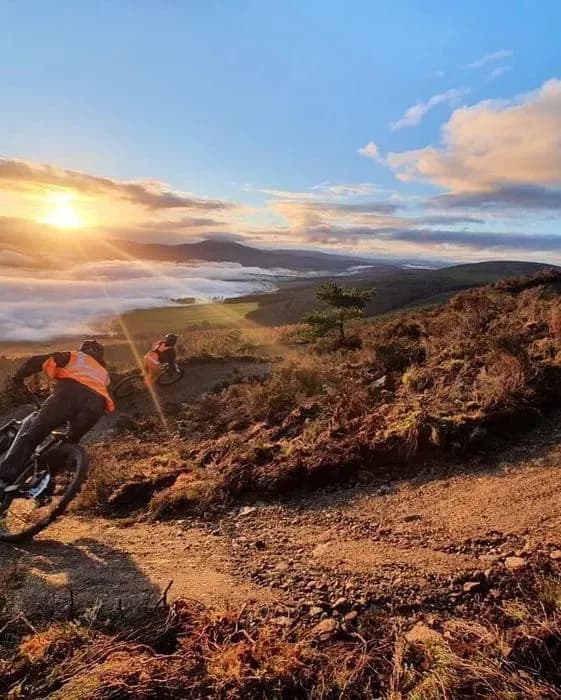
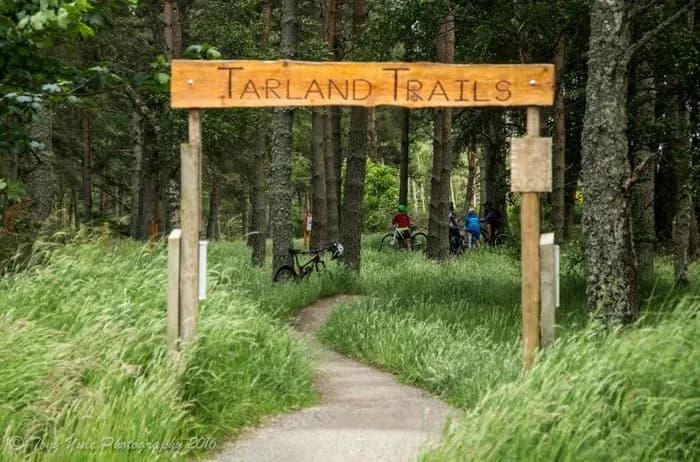
Tarland Trails Pittenderich, Aberdeenshire
About 17km of blue, red and black trails across 12 sections, the larger of the two Tarland sites. The top of the hill is open and exposed.
Riders say “Holds up really well in winter.”
Tarland Trails Drummy Woods, Aberdeenshire
The smaller, beginner-friendly Tarland site, with built flow, jump and pump trails on an all-weather surface.
Central and West
3 listings
Carron Valley, Stirling
Trails built solid because the ground underneath is soft and wet, and a regular winter ride for riders who find other trails too muddy. The forest road loop is firm gravel.
Comrie Croft, Perthshire
21km of purpose-built blue, red and black trails on a working farmstead, free to ride and open all year, plus a skills park and an all-weather pump track. Some natural sections get muddy in the wet.
Riders say “Great wet weather centre.”
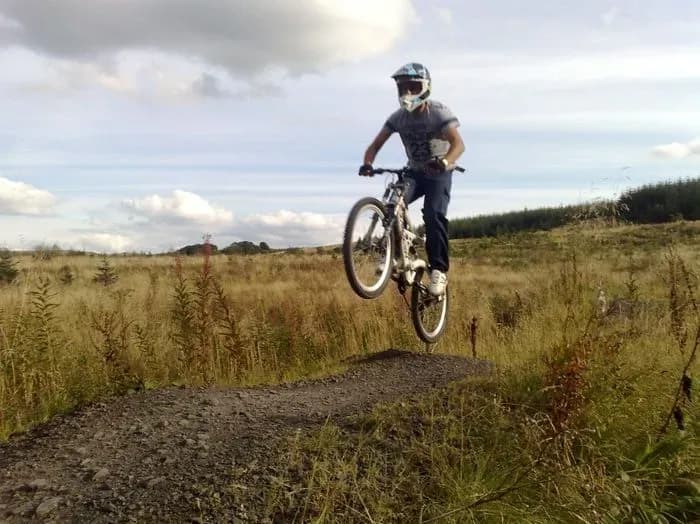
Dyemill Bike Park, Isle of Arran
A skills park designed for all weather, with a crushed stone surface and an asphalt pump track.

_700x700.webp&w=3840&q=75)
South of Scotland
4 listings
Glentress, Scottish Borders
Purpose-built trails with all-weather surfaces that run fast even in the rain. Expect snow or ice on the exposed upper trails in a cold spell.
Forest of Ae, Dumfries and Galloway
The green and the waymarked red loops are the winter choice. The downhill runs and the more natural sections are wet and slow after rain.
Dalbeattie, Dumfries and Galloway
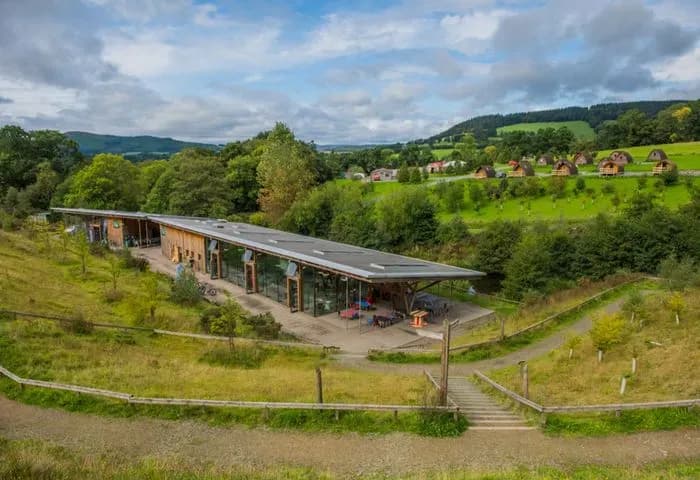
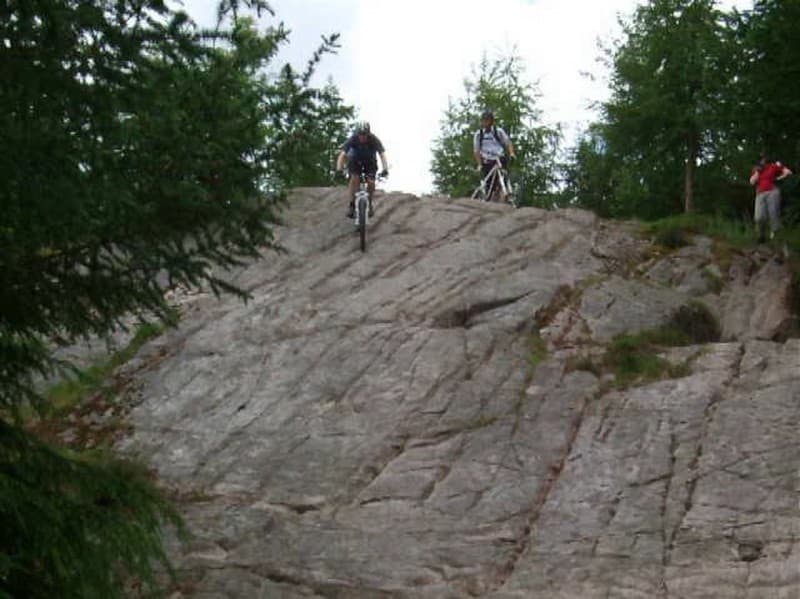
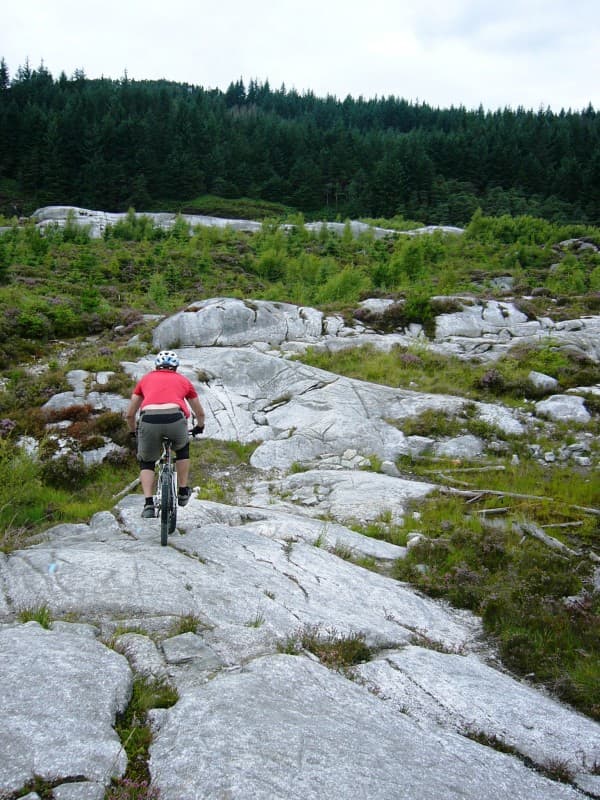
The Hardrock trail runs over granite slabs that drain freely, and the Ironhash green is mostly forest road and easy in any weather. Wet granite is slippery, so take the slabs steadily.
Kirroughtree, Dumfries and Galloway
The green and blue forest trails are the easier winter choice. The granite slabs of McMoab drain well but are slippery when wet.
Northern Ireland
1 listing
Castlewellan, County Down
Built forest trails where the green and blue loops are the better winter pick. The red can be wet and tacky after rain, and storms have brought trees down across it.
_700x700.webp%3Falt%3Dmedia%26token%3D9738eb8e-46b1-47f8-ba0a-4ef2ca5e8339&w=3840&q=75)
Something missing?
Know a venue that rides well in winter that we have missed, or something here that is out of date? Leave a comment on this guide or get in touch, and we will check it and update the guide. If you ride somewhere through the winter, a review on its trail page helps other riders, and helps us keep this guide right.
Hero photo by Jan Kopřiva on Pexels.