ChatMTB is an AI assistant — AI can make mistakes, always verify info
.jpg%3Falt%3Dmedia%26token%3D1bc62a1c-13c3-4904-bc82-2f83edfc44a3&w=3840&q=85)
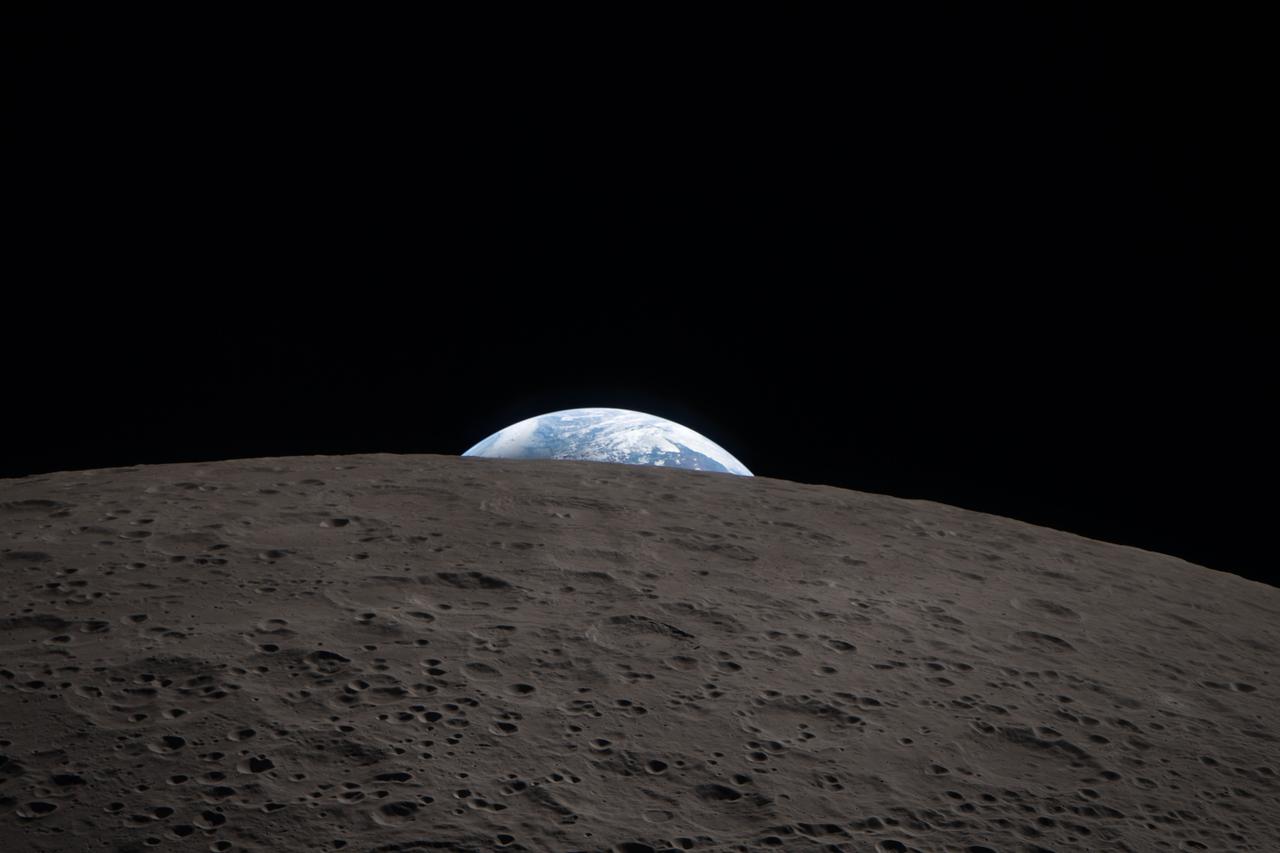
Early this morning, four astronauts splashed down safely in the Pacific after travelling further from Earth than any human before and heralding the first crewed space flight to the moon since 1972. The Artemis II mission captivated millions, not just for what it achieved, but for what it signals. With a crewed Moon landing now targeted for 2028, China racing to follow by 2030, and Mars firmly in the sights of both NASA and private operators, including SpaceX, we are living through the most sustained era of human space exploration since Apollo. What most riders don't realise is that the mountain bike underneath them already carries the fingerprints of that endeavour, and the next chapter is likely to leave more. Let's break it down:
The frame
The carbon fibre in your frame was not developed for cycling. Its origins lie in aerospace and defence engineering in the 1950s and 60s, when engineers needed materials that could withstand conditions no metal could handle. By 1971, Gerald O'Donovan of Carlton Cycles (later Raleigh SBDU) had become one of the first people to apply that aerospace material to a bicycle, displaying a carbon composite frame at the Cycle and Motorcycle Show in Harrogate. The Exxon Graftek followed in 1976, an aluminium and carbon hybrid used by the US Olympic team that same year. Look's KG 86, built with carbon tubes by French aerospace supplier TVT, became the first carbon bike to win the Tour de France when Greg LeMond rode it to victory in 1986. The frames on trail today are the direct descendants of that material journey from aircraft to road to mountain bike.
The navigation beneath every ride
GPS is not a space programme story per se. It is a military one with strong space links. The US Department of Defence developed NAVSTAR GPS originally for use by the United States military, becoming fully operational in 1995, with civilian use permitted from the 1980s. Its origins lie in the Cold War, when American scientists observed they could track Sputnik's movement using the Doppler effect on its radio signal. That observation eventually led DARPA to develop early space satellite navigation for warships and submarines. The same network of military satellites now underpins every Garmin unit, every Komoot route, every Strava segment and every emergency location shared on the trail. Riders have been navigating by defence infrastructure in space for years without knowing it.
The lid
Jim Gentes, founder of Giro Sport Design, worked directly with Raymond Hicks, an aerodynamicist at NASA's Ames Research Centre, to design the Giro Prolight helmet. Hicks applied NACA airfoil technology, originally developed by NASA's predecessor agency, to reduce drag in aircraft to create a helmet shape that was both lightweight and aerodynamically efficient. The Prolight was worn by the 1989 Tour de France winner and established aerodynamic shaping as a core principle of cycling helmet design.
The kit
In the 1980s, NASA funded research into phase-change materials for spacesuit gloves. That technology was later commercialised as Outlast fabric, now found in cycling jerseys, gloves and socks across multiple brands. The material absorbs heat as temperature rises and releases it as conditions cool, managing exactly the kind of temperature swings riders experience between the valley floor and exposed ridgeline.
The battery in your eMTB
The lithium-ion battery was not invented by the space programme. It emerged from academic chemistry in the 1970s and was first commercialised by the consumer electronics industry in 1991. But NASA was one of the earliest adopters, ahead of the aircraft and auto industries, pushing Li-ion technology harder than consumer markets alone because the advantages of smaller, longer-life batteries in space are so significant. By 1997, NASA, the Jet Propulsion Laboratory and the US Air Force had established a joint programme to develop high-power rechargeable lithium-ion battery technology specifically because commercial developments were not meeting their requirements, driving advances in energy density, thermal tolerance and cycle life that filter directly into every eMTB battery pack.
The connection runs through private industry, too. LG Energy Solution is now supplying cylindrical lithium-ion batteries specifically engineered for SpaceX's Starship rocket, with space-grade qualification standards that raise the baseline for the same cells in consumer applications. China's CATL, which supplies batteries to most major eMTB brands, is simultaneously one of the key suppliers to China's own space programme. The demands of that programme are shaping the same battery chemistry that powers your next climb.
The tyre that never punctures
NASA's Curiosity rover has been operating on Mars since 2012. Its aluminium wheels suffered significant damage from the sharp Martian terrain, prompting new engineering work on tyre alternatives for future missions. The Smart Tire Company's METL tyre uses shape memory alloy technology developed directly from the Mars rover work. The design weaves shape memory alloy into a pattern that displaces energy optimally, producing a ride comparable to a pneumatic tyre without the need for an inner tube or air pressure: superelastic, puncture resistant, never flat, with development targeting mountain bike applications. The product is not yet widely commercially available, but the engineering is confirmed, and the connection to the Mars programme is direct. As Artemis prepares crewed surface missions requiring reliable rover mobility in conditions far more demanding than Curiosity faced, that engineering pressure will only intensify.
The wider picture
The technology flowing from space programmes into everyday life extends well beyond individual components. Advances in autonomous medical monitoring developed for long-duration spaceflight are behind the biometric wearables now used in elite rider performance tracking. Manufacturing techniques pioneered by private launch companies, particularly in precision composite production and 3D-printed structural components, are reshaping how high-performance lightweight parts are made at scale, with implications for bike component manufacturing over the coming decade. China's space programme, running in parallel and at a significant pace, is driving its own engineering advances in materials and energy storage through a different industrial ecosystem, but one that feeds the same global supply chains the bike industry draws from. SpaceX's Starship, the vehicle intended to carry humans to Mars, is now an active part of the Artemis lunar landing programme. The line between government space agencies and private innovation has effectively dissolved. What NASA demands, private industry delivers. What private industry develops, consumer markets eventually inherit.
What comes next
The most honest thing that can be said about future technology is that its most significant applications are rarely the ones anyone predicted. Memory foam, water filtration, scratch-resistant lenses: none of these was anticipated outputs of the Apollo programme, yet all became part of daily life. The engineering challenge of sustaining human life on Mars, managing energy, materials, food production and medical autonomy with no possibility of resupply, is the most demanding design brief in human history. Which solutions to that brief find their way onto a trail bike in fifteen or twenty years is genuinely unknown. What fifty years of aerospace spinoffs suggest is that something will. The thing that ends up mattering most probably hasn't been invented yet.
Photo Credit: NASA
Read: 76 times Published: 11/04/2026